How we work
Quote to dock.
Every job is tracked through the same system the figures on this site come from. That is how we can tell you where your parts are without walking out to look.
-
Step 01
Send the print
Drawing, model or sample. We quote from what you send and ask before assuming.
-
Step 02
Nest and schedule
Your parts get nested onto sheets and slotted against real machine capacity, not a guess.
-
Step 03
Cut, form, finish
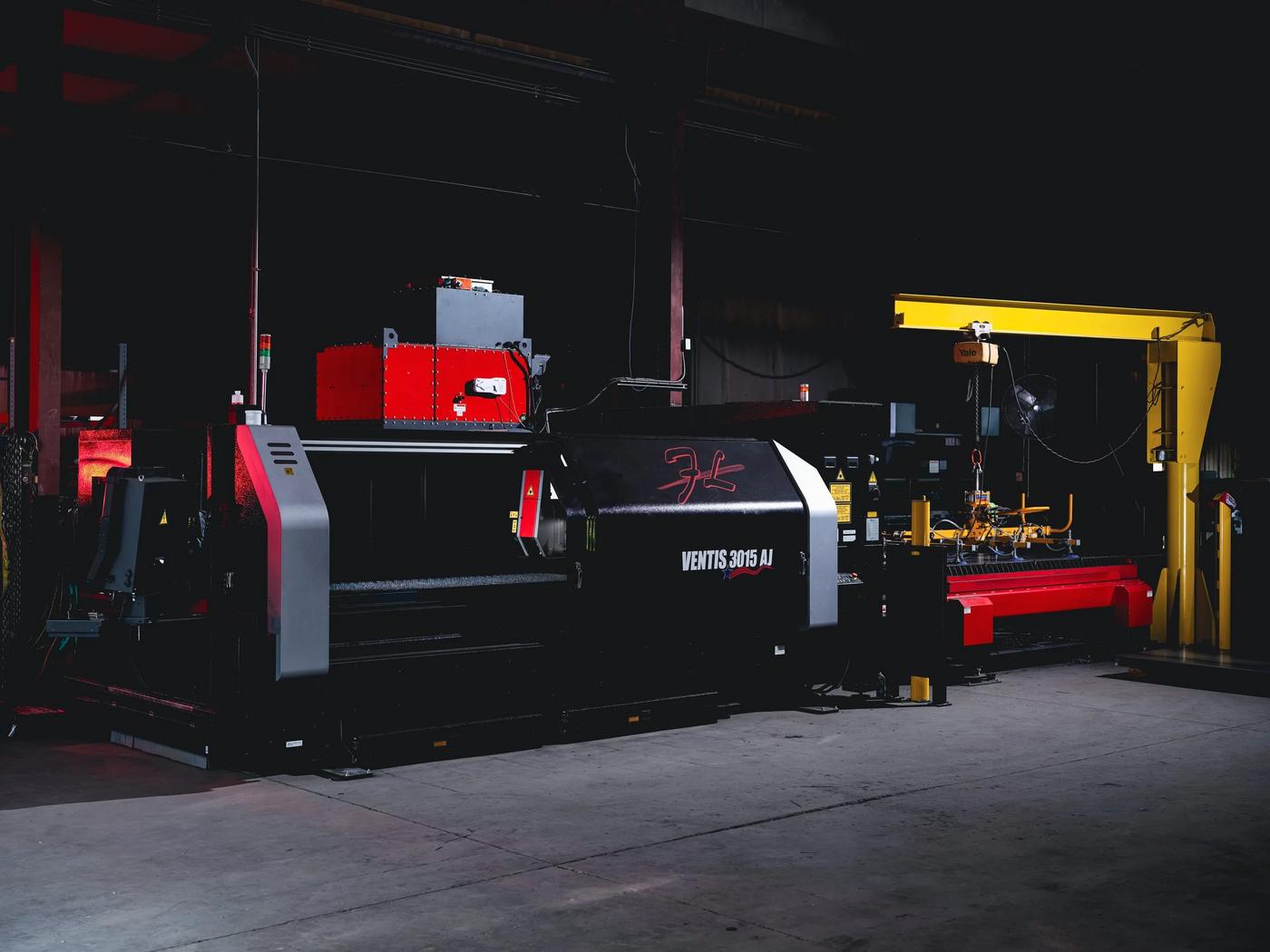
Each station logs what it produced and anything it scrapped — that is where the yield number comes from.
-
Step 04
Packed and shipped
Parts are packed to a plan built for the order, with a manifest of exactly what is on the pallet.
Your representative
Your rep is on
the shop floor.
Plenty of shops will assign you a dedicated account manager. Usually that manager's actual job is to go and ask somebody else — sales quoted it, engineering programmed it, the floor ran it, accounting invoiced it, and your contact is the person relaying between them.
Every KanCraft order is assigned a single representative who oversees it end to end. The difference is where that person sits: not between you and the shop floor, but on it. Your rep quotes the part, engineers it, programs the laser and the brake that cut and form it, and follows it through production and invoicing.
contact
& DFM
programming
programming
updates
& after
- “Where is my order?”
- Ask your rep — who can see every part at every station, and was standing there when it ran.
- “Can this feature be cheaper?”
- Ask the person who programmed it. They already know what that bend sequence and that nest cost you.
- “There's a question on the invoice.”
- Your rep again. Same number, no ticket, no queue, no being handed off.
That is why nothing is lost in translation between your drawing and the machine — there is no translation. The judgment that read your print is the judgment that set up the job.
And it does not rest on memory. Every job, every part and every station is tracked in the system the figures on this page come from, so what your rep knows, the shop has on record.
Packaging
Every part has
an address.
Most shops ship you pallets. Four of them arrive shrink-wrapped with the order mixed across all four, and finding the twelve pieces your line needs on Monday means breaking down every one of them on the dock.
Before a part is cut here it already has a place: a numbered box, in a known position, on a numbered pallet. The box carries a label listing what is inside it and how many. The shipment carries a manifest mapping every part to the box it is in.
| Box | Part | Qty | Finish state |
|---|---|---|---|
| BOX-J3N9 | BRKT-114-A | 40 pcs | Formed, blasted |
| BOX-K7P2 | PLATE-220 | 120 pcs | Laser only |
| BOX-M2R8 | GUSSET-31 | 64 pcs | Formed |
| — | FRAME-902 | 18 pcs | Stacked direct to pallet |
- Every box carries a permanent ID that is never reused, even if a box is removed
- Labels list the contents and the count, not just a part number
- The manifest maps every part on the shipment to the box holding it
- Pallets are packed to a plan with real box dimensions — no overhang, no guessing
- Parts too large to box are stacked direct and labeled as their own stack
- One order across several pallets still reads as one document
The system
Nothing here
runs on memory.
A shop this size is meant to run on a whiteboard and somebody's recall. That is the ceiling most small shops hit — the work is good, but nobody can tell you where a part is, what it cost, or which sheet it came off without walking out to look.
Every job, task, clock punch, sheet, defect and shipment here is a record in a production system we built and run the shop from. The same system schedules the machines, tells your rep where your parts are, plans the boxes they ship in, prints the manifest, raises the invoice, and publishes the figures on this page. Written once, used by all of it.
Every task is clocked
Start, pause and complete, by the operator who ran it. That is where the laser hours on this site come from.
Every sheet is traced
Back to the purchase order it arrived on, so a question about material six months from now still has an answer.
Every defect is recorded
At the station that made it, with a reason. That is where the yield figure comes from, published whether it flatters us or not.
The schedule recomputes every 15 minutes
Against real machine capacity and what has actually finished — not a plan drawn on Monday and defended all week.
Every part has a place before it is cut
The packing plan is built when the order is, not improvised at the loading dock.
People overrule it
The system proposes priorities and dates. The office overrides them when it knows better, and the override is recorded too.
None of this is unusual for a large manufacturer. It is unusual at our size, and it is the reason the delivery and quality figures on this page look the way they do.